
Photography Guides
Blue Hour Photography Guide: Settings, Timing & Long Exposure Tips
Daydream Editorial
· 12 min read
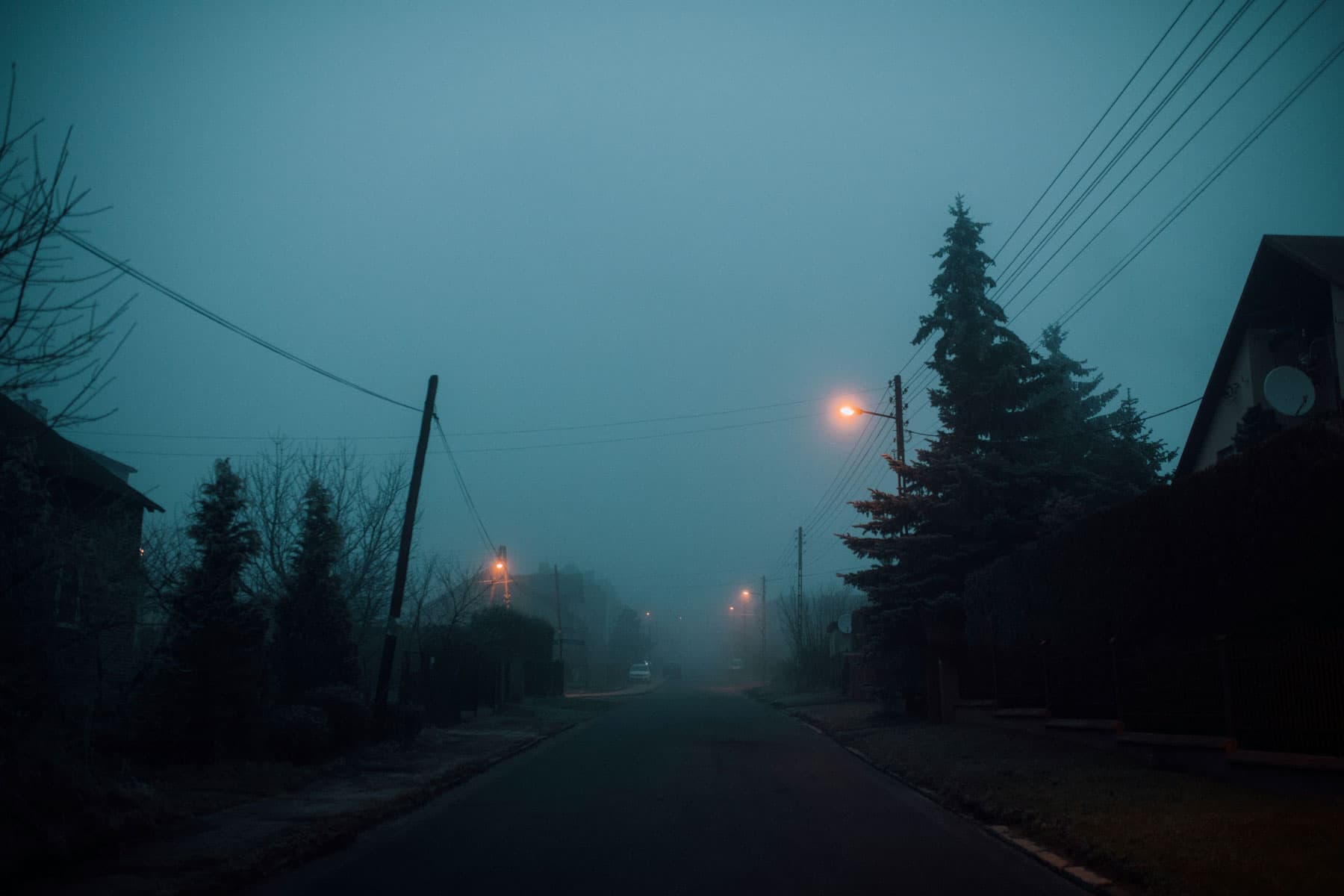
Blue hour photography presents a narrow window of opportunity that many photographers miss entirely. Pack up right after sunset and you've lost the most magical light of the day. That brief period when the sky glows deep blue while city lights illuminate creates a balance that exists nowhere else. Film photography at blue hour demands precise timing, careful metering, and understanding that your 36 exposures must count during a 20-40 minute window that won't wait.
What You'll Learn
This comprehensive guide covers everything you need to master blue hour photography on film—from essential gear and camera settings to timing strategies, long exposure techniques, and working with artificial lights. Whether you're shooting cityscapes, landscapes, or architectural scenes, you'll find actionable advice to capture twilight with authentic film aesthetics.
Who This Guide Is For
Photographers (intermediate to advanced) who want to capture the deep blue tones and atmospheric light of twilight on film, understanding the unique challenges of timing, metering, and long exposures without digital safety nets.
The challenge and reward of blue hour photography
Blue hour photography demands precise timing in a 20-40 minute window when the sun sits below the horizon. You're balancing deep blue skies with artificial lights, calculating exposures that stretch into minutes. On film, you can't check results until development.
When you nail it, you capture moody atmosphere and color contrast. Film's latitude handles the transition from blue sky to warm lights gracefully. The difference comes down to timing and trusting your calculations.
Essential equipment for blue hour photography
You don't need the most expensive gear to shoot great blue hour photos, but certain tools make a significant difference.
Camera body requirements
Manual SLRs with bulb mode handle blue hour well. A Nikon FE2 offers dependable metering and bulb mode. The Pentax 67 delivers exceptional medium format detail. The Contax T2 provides sharp optics for urban scenes. Budget option: any manual SLR with bulb mode works.
Lenses that work
Wide-angle lenses (24-35mm) capture expansive cityscapes. A 28mm f/2.8 offers versatility. A 50mm f/1.8 works for detail shots. You'll use a tripod and stop down to f/8-f/11 for starbursts from lights.
Film stocks & accessories
Portra 400 delivers natural color and handles mixed lighting. Portra 160 offers fine grain and rich colors for cleaner blue hour shots. Cinestill 400D is tungsten-balanced, rendering city lights neutrally. Portra 800 works for darker twilight. Ektar 100 provides saturated colors with deep blues.
Essential accessories: sturdy tripod, cable release, exposure meter, stopwatch for bulb mode, flashlight.
Camera settings for blue hour photography
Start with these settings as your foundation, then adapt based on conditions.
Exposure & metering
For blue hour, meter for midtones and use film latitude to handle deep blue sky and bright lights. Portra 400 has 5+ stops of latitude.
Settings recipe:
- Film: Portra 400 or Cinestill 400D (ISO 400)
- Aperture: f/8 to f/11 (creates starbursts)
- Shutter speed: 4-30 seconds
- Metering: Center-weighted
- Push/pull: Normal development
Cinestill 400D renders tungsten lights neutrally. Stopping down to f/8 creates starbursts from streetlights. Bracket by shooting at meter reading, +1 stop, -1 stop.
- •Film: Portra 400 or Cinestill 400D (ISO 400)
- •Aperture: f/8 to f/11 (creates starbursts)
- •Shutter speed: 4-30 seconds
- •Metering: Center-weighted
- •Push/pull: Normal development
Focus technique
Manual focus ensures sharp results—low light fools autofocus. Use split-prism or microprism focusing screen.
Pre-focus on your main subject. At f/8-f/11, depth of field covers most of the scene from 10 feet to infinity. For landscapes, focus one-third into the scene.
Zone focusing: at f/11, set focus to 15 feet for sharpness from 8 feet to infinity.
Film handling & technique
Use cable release for every shot to prevent shake. Track your frames—blue hour burns through film quickly as you bracket.
Bulb mode for exposures beyond 30 seconds: use a stopwatch. For very long exposures, account for reciprocity failure.
At $1.50/frame, bracket important shots but shoot deliberately.
Composition & creative techniques
Technical settings get you sharp, well-exposed images. Composition makes them compelling.
Framing & perspective
Elevated perspectives create dynamic cityscapes. Shoot from bridges, rooftops, or hillsides to capture skylines against blue sky. Eye-level works for street scenes emphasizing architecture and twilight.
Include foreground elements—railings, pathways, water's edge—to add depth. Fill the frame or leave negative space in blue sky to emphasize twilight's vastness.
Leading lines & shapes
Streets create natural leading lines toward illuminated buildings. Bridges provide geometric shapes framing distant lights.
Architectural elements—columns, arches, edges—create structure complementing soft blue light. Repetition of streetlights adds visual rhythm.
Position yourself so waterfront leads to illuminated buildings, transforming ordinary scenes into compelling narratives.
Depth & layering
Layer elements at different distances. Use foreground silhouettes (trees, monuments) to separate from midground (buildings, water) and background (sky gradient).
Aperture at f/8-f/11 keeps everything sharp while creating starbursts. Shoot at f/11 from 20 feet—near elements stay sharp while distant lights become defined points with starbursts.
Genre-specific composition tips
Position yourself so warm lights contrast against cool blue sky. Keep horizon level—blue hour emphasizes horizontal lines. Water surfaces mirror both sky and lights, creating balanced compositions.
Lighting techniques for blue hour photography
Light makes or breaks blue hour photos. Here's how to work with it.
Natural light strategies
Blue hour provides soft, diffused blue light from indirect sunlight scattered in atmosphere. The cool tones create moody atmosphere distinct from golden hour's warmth.
Stages:
- Early (right after sunset): purple-pink gradient with sunset colors near horizon
- Mid (15-20 minutes after): deep uniform blue, perfect balance with lights
- Late (30-40 minutes after): sky darkening, lights dominate
Position yourself facing away from where sun set for deepest blue sky. Urban photography and architecture photography benefit most from this directional approach.
- •Early (right after sunset): purple-pink gradient with sunset colors near horizon
- •Mid (15-20 minutes after): deep uniform blue, perfect balance with lights
- •Late (30-40 minutes after): sky darkening, lights dominate
Artificial light approach
City lights, streetlamps, and building illumination provide warm contrast against cool blue sky.
Arrive 30 minutes before twilight ends. As blue hour progresses, artificial lights match ambient blue light brightness. This 5-10 minute sweet spot creates balanced exposures.
Tungsten lights render warm orange on Portra 400, creating warm-cool contrast. Cinestill 400D renders lights neutrally.
Meter for overall scene when lights and sky balance. At f/8-f/11, lights become starbursts. Start with 8-15 second exposures and bracket.
Challenging lighting scenarios
Solutions:
- Too-bright lights: expose for lights, let sky go darker
- Uneven lighting: bracket exposures and blend later
- Changing light: meter every few minutes
- Very late twilight: push film one stop or switch to Portra 800
- •Too-bright lights: expose for lights, let sky go darker
- •Uneven lighting: bracket exposures and blend later
- •Changing light: meter every few minutes
- •Very late twilight: push film one stop or switch to Portra 800
Blue hour photography workflow & shooting tips
A systematic approach to blue hour photography increases your success rate and reduces stress during the short window.
Preparation & planning
Use PhotoPills or The Photographer's Ephemeris to find exact blue hour times. These vary by latitude and season.
Checklist: scout location in daylight, arrive 45 minutes early, load fresh film, check gear (cable release, batteries, stopwatch, flashlight).
During the shoot
Start when city lights turn on and sky still has color. Shoot continuously.
Shot progression: wide shots, medium shots, detail shots, bracketed variations.
Use cable release for every shot. Verify focus between compositions.
Shoot priority compositions first, then experiment. Adjust shutter speed as twilight fades—from 4 seconds to 30+ seconds.
Adapting to challenges
When light fades faster, open to f/5.6 or push film one stop.
Quick fixes:
- Autofocus hunting: switch to manual focus
- Inconsistent meter: meter off midtone area
- Running out of time: prioritize best composition and bracket thoroughly
- •Autofocus hunting: switch to manual focus
- •Inconsistent meter: meter off midtone area
- •Running out of time: prioritize best composition and bracket thoroughly
Post-processing blue hour photography
Blue hour photos benefit from careful editing—enhancement rather than transformation.
Essential adjustments
Lift shadows slightly to reveal foreground details while protecting deep blue sky.
Workflow: adjust exposure, add moderate contrast to separate sky from lights, preserve blue tones, bring down blown-out lights.
Increase contrast by 10-15% to make lights pop without harsh transitions.
Genre-specific techniques
Enhance warm-cool color contrast by increasing saturation in blues and oranges. This emphasizes natural color separation.
If shooting at f/8-f/11 created starbursts, increase clarity slightly. Add gentle vignetting (10-15% darkening) at frame edges.
Consistency & style
Use same white balance across all blue hour images. Batch editing works well—apply base adjustments across frames, then fine-tune individually.
Common mistakes & how to avoid them
Even experienced photographers make these blue hour mistakes. Here's how to avoid them.
Mistake 1: Packing up after sunset
Most photographers leave right after sunset, missing blue hour entirely.
Solution: Stay 40 minutes past sunset. The best light happens 20 minutes after sunset when lights and sky balance.
Mistake 2: Shooting too late
Waiting until sky is black eliminates the blue hour aesthetic.
Solution: Start when city lights turn on but sky still has color. Use PhotoPills to know exact times.
Mistake 3: Not using a tripod
Handheld shots result in camera shake blur during long exposures.
Solution: Always use a sturdy tripod. Add cable release to prevent vibration.
Mistake 4: Overexposing
Brightening too much destroys moody atmosphere and makes sky pale gray.
Solution: Expose for the scene as it appeared. Meter for midtones and accept deep shadows.
Pro blue hour photography tips & techniques
Once you've mastered the basics, these advanced techniques elevate your blue hour photography.
Bracket every important composition: Shoot the same scene at meter reading, +1 stop, and -1 stop. Film latitude is forgiving, but bracketing ensures you capture the exact exposure you want without guessing.
Use graduated neutral density filters: When sky is significantly brighter than foreground (early blue hour), a 2-stop grad ND filter balances exposure. Hold back the sky while properly exposing the darker city below.
Shoot both morning and evening blue hour: Morning blue hour (before sunrise) offers empty streets and calm conditions. Evening blue hour (after sunset) provides more activity and energy. Same light, different atmosphere.
Incorporate water for reflections: Lakes, rivers, harbors, and even puddles double your visual impact by mirroring both blue sky and artificial lights. Position yourself to include these reflections in your composition.
Gear recommendations summary
* Prices as of December 2024 – always check current pricing. These are starting points, not requirements.
| Category | Budget Option | Mid-Range | Professional |
|---|---|---|---|
| Camera Body | Any manual SLR with bulb mode ($50-150) | Nikon FE2 ($300-500) | Pentax 67 ($800-1500) |
| Primary Lens | 50mm f/1.8 ($50-100) | 28mm f/2.8 ($200-400) | 24mm f/2.8 ($400-800) |
| Film Stock | Kodak Gold 200 ($8-10/roll) | Portra 400 ($12-15/roll) | Cinestill 400D ($15-18/roll) |
| Tripod | Basic aluminum ($40-80) | Manfrotto aluminum ($150-250) | Carbon fiber ($300-600) |
FAQs (intent catchers)
What are the best camera settings for blue hour photography?
For blue hour, start with Manual mode, ISO 400 film (Portra 400 or Cinestill 400D), f/8 to f/11 for starbursts from lights, and shutter speeds of 4-30 seconds depending on light levels. Use center-weighted metering for the overall scene. These settings work for cityscapes with artificial lights during the 20-40 minute window after sunset when sky is still blue.
What camera is best for blue hour photography?
The best camera for blue hour has bulb mode for long exposures, reliable metering, and cable release capability. The Nikon FE2 excels at blue hour with accurate center-weighted metering and dependable bulb mode, while the Pentax 67 offers exceptional medium format detail. For beginners, any manual SLR with bulb mode works. Honestly, a sturdy tripod and proper timing matter more than expensive camera bodies.
How do I photograph blue hour in low light?
Blue hour in low light requires a tripod, cable release, and longer shutter speeds. Use ISO 400 film (Portra 400 or Portra 800), stop down to f/8-f/11, and let shutter speed fall where it may (typically 4-30 seconds). Meter for midtones and bracket exposures. Manual focus prevents autofocus hunting in dim conditions. The tripod is non-negotiable—you can't handhold 15-second exposures.
What lens should I use for blue hour photography?
For blue hour, 24mm to 35mm wide-angle lenses work best because they capture expansive cityscapes and architecture. A 28mm f/2.8 is excellent for most blue hour work, while a 24mm f/2.8 offers wider coverage. Aperture matters less than with night photography since you'll use a tripod and stop down to f/8-f/11 for starbursts. Budget option: a 50mm f/1.8 delivers excellent quality for tighter compositions.
How long does blue hour last?
Blue hour lasts 20-40 minutes depending on your latitude and time of year. Near the equator, it's shorter (15-20 minutes). At higher latitudes, it extends longer (30-40+ minutes). Use PhotoPills or The Photographer's Ephemeris app to find exact blue hour times for your location. It happens twice daily—before sunrise and after sunset—when the sun is 4-6 degrees below the horizon.
What's the difference between blue hour and golden hour?
Blue hour occurs before sunrise or after sunset when the sun is below the horizon, creating deep blue tones and soft, diffused light. Golden hour happens when the sun is just above the horizon, providing warm, golden light. Blue hour is cooler, moodier, and lasts 20-40 minutes. Golden hour is warmer, more dramatic, and lasts about an hour. Both offer beautiful light for photography but create different moods.
When should I start shooting blue hour?
Start shooting blue hour when city lights turn on and sky still has color—typically 5-10 minutes after sunset. Don't wait for "perfect" blue because light changes every minute. Arrive 45 minutes before blue hour to set up, compose, and test settings. The sweet spot is 15-20 minutes after sunset when artificial lights balance perfectly with blue sky brightness.
How do I meter for blue hour photography?
Meter for the midtones in your scene—a building facade or street surface, not the bright sky or lights. Use center-weighted metering for overall scene brightness. Bracket exposures by shooting at meter reading, +1 stop, and -1 stop. Film latitude handles the range between deep blue sky and bright artificial lights. Check your meter reading every few minutes as twilight fades—light changes rapidly during blue hour.
Conclusion: Your blue hour photography journey
Blue hour photography demands precise timing and technical discipline, but captures scenes with atmospheric depth that make viewers feel twilight's tranquility. Start with proper timing—use PhotoPills to know exact blue hour windows for your location. Shoot deliberately during the 20-40 minute window, bracketing important compositions.
Remember: even experienced photographers struggle with blue hour timing at first. Every film photographer has missed the window or shot too late. The difference is persistence and learning from each roll.
Next steps:
- Scout a location: find a spot with city lights and clear sky view
- Check blue hour times: use PhotoPills for your location and date
- Shoot a full roll: arrive early, stay through entire blue hour, bracket exposures
Blue hour photography rewards patience and planning. Your unique perspective on twilight matters because film captures this light in ways digital sensors can't match. Now get out there and shoot the magic hour everyone else misses.
- •Scout a location: find a spot with city lights and clear sky view
- •Check blue hour times: use PhotoPills for your location and date
- •Shoot a full roll: arrive early, stay through entire blue hour, bracket exposures
Author notes (E-E-A-T)
Written by: Daydream Content Team — photographers with 15+ years shooting film in various genres including landscape, cityscape, and architectural photography
Experience: Extensive blue hour shooting across multiple continents, from urban environments to natural landscapes. Hundreds of rolls shot during twilight conditions, understanding the technical challenges and timing requirements specific to film photography.
Gear used: Nikon FE2, Pentax 67, Contax T2, various wide-angle lenses (24mm, 28mm, 35mm). Primary film stocks: Portra 400, Cinestill 400D, Portra 800, Ektar 100, HP5 Plus.
Teaching background: Workshop instruction for film photographers, focus on technical mastery and timing for challenging lighting conditions
Conflicts of interest: None. No affiliate relationships. Daydream app mentioned as complementary tool for film photographers.
Related Topics
Related reading
Join the iOS Beta
Join the beta to experience authentic film photography with Daydream Film when we launch.