
Photography Guides
Dance Photography Guide: Camera Settings, Timing & Low Light Tips
Daydream Editorial
· 10 min read
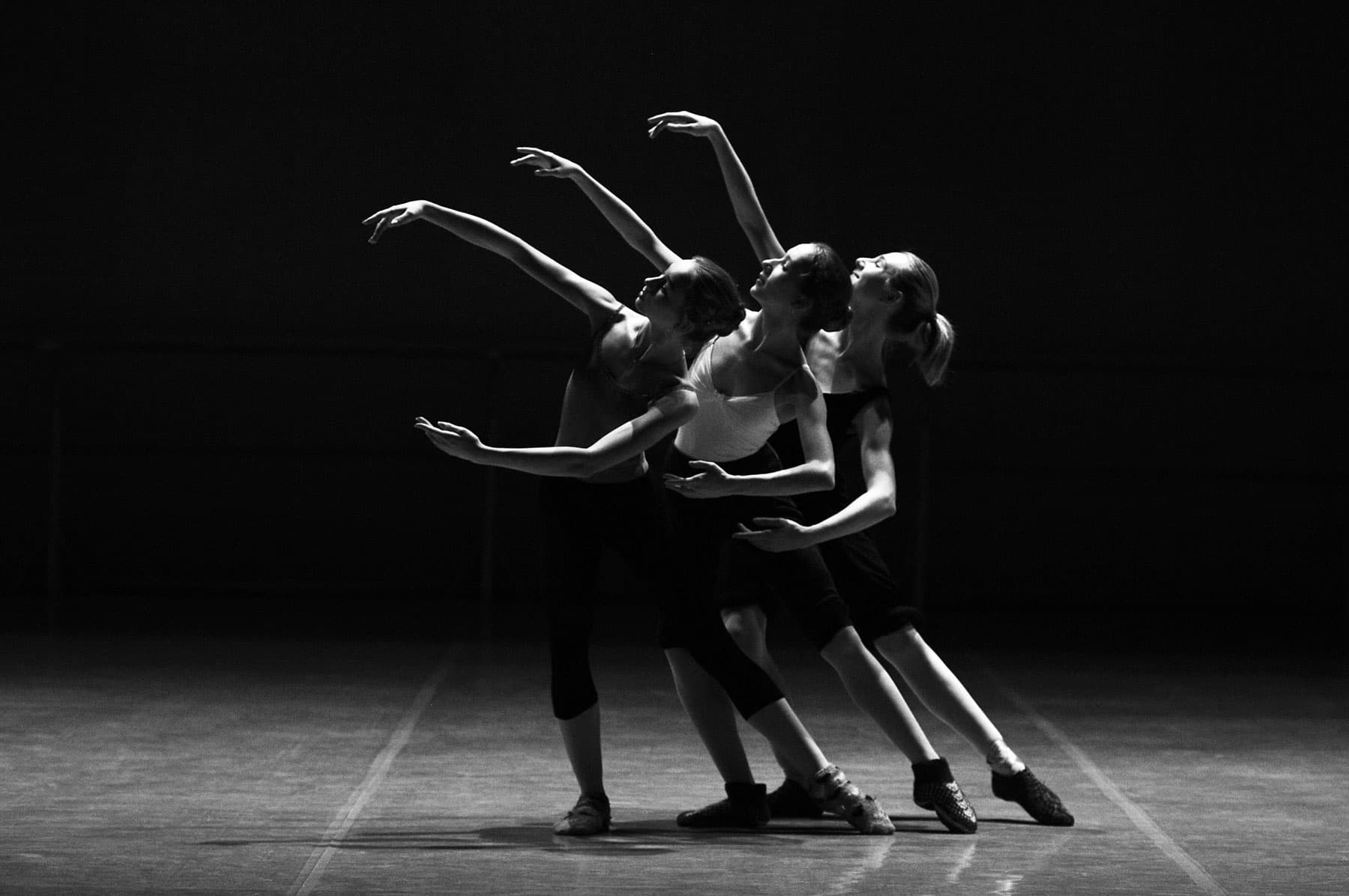
Watching a dancer leap feels effortless. Photographing that leap on film is anything but. Dance photography demands split-second timing, technical precision in near darkness, and the ability to predict movement before it happens. Miss by a tenth of a second and you capture the landing instead of the apex. The moment is gone, the film is exposed, and you can't rewind.
What You'll Learn
This guide covers dance photography on film, from camera settings and film stock selection to anticipation techniques, working with stage lighting, and collaborating with dancers. You'll learn to freeze peak moments and work within the constraints of film's fixed ISO and cost per frame.
Who This Guide Is For
Intermediate film photographers who understand manual exposure and want to capture movement, work in challenging low-light venues, and create images that honor the athleticism and artistry of dance.
The challenge and reward of dance photography
Dance photography demands anticipation, fast reflexes, and technical mastery in dim venues. Stage spotlights confuse even reliable light meters. Dancers move faster than your shutter lag. Film costs $15-20 per roll, so every frame matters.
When you nail the timing, you freeze emotion and athleticism at their peak. A dancer suspended mid-leap, expression and form aligned perfectly. These images tell stories that honor months of training compressed into a single frame.
The difference between a snapshot and a stunning dance photo comes down to anticipation. Learn the choreography, feel the music's rhythm, and press the shutter before the peak moment arrives.
Essential equipment for dance photography
You don't need the most expensive gear, but certain tools make a significant difference when shooting in dark venues.
Camera body requirements
Manual 35mm SLR with fast shutter speeds (1/1000s capability), reliable meter, and motor drive. Motor drive captures 3-5 frames through a movement sequence without making dancers repeat exhausting jumps.
The Canon AE-1 Program or Nikon FM2 handles dance well with dependable metering and shutter speeds to 1/1000s. The Pentax K1000 delivers reliable performance for less on the used market. The Nikon F3 with motor drive offers speeds to 1/2000s.
Lenses that work
Fast glass is non-negotiable. A 135mm f/2.8 or 85mm f/2 gives you reach from audience positions while gathering enough light. For rehearsal access, a 50mm f/1.4 or 35mm f/2 works beautifully.
Wide apertures (f/2.8 or faster) let you shoot in dim stage lighting while isolating dancers from backgrounds. Budget alternative: A 50mm f/1.8 is affordable and versatile.
Film stocks & accessories
Portra 800 or Cinestill 800T delivers the speed you need for stage lighting while maintaining fine grain and accurate skin tones. HP5 Plus 400 pushed to 1600 works for dramatic black and white.
Cinestill 800T is tungsten-balanced for stage lights. Portra 800 offers more latitude for mixed lighting. Essential accessories: handheld light meter if your camera's meter struggles with spotlights.
Camera settings for dance photography
Start with these settings as your foundation, then adapt based on stage lighting and movement speed.
Exposure & metering
Meter for highlights (the dancer's lit face) and use film latitude for shadow detail. Portra 800 has 2-3 stops of overexposure latitude. Exposing for highlights protects them while shadows remain printable.
Settings for stage performance:
- Film: Portra 800 or Cinestill 800T (ISO 800)
- Aperture: f/2.8 (gathers light, isolates dancer)
- Shutter speed: 1/500s (freezes jumps and fast movement)
- Metering: Center-weighted on dancer's face
- Development: Normal (push only if light is insufficient)
Stage lighting is contrasty. Spotlights on dancers, darkness everywhere else. Your meter averages the scene and overexposes. Instead, meter the lit dancer directly, lock exposure, recompose, shoot. Film ISO is fixed. You can't change it mid-roll. Choose film based on expected lighting conditions.
- •Film: Portra 800 or Cinestill 800T (ISO 800)
- •Aperture: f/2.8 (gathers light, isolates dancer)
- •Shutter speed: 1/500s (freezes jumps and fast movement)
- •Metering: Center-weighted on dancer's face
- •Development: Normal (push only if light is insufficient)
Focus & timing
Pre-focus on the spot where the peak moment happens, then fire just before the dancer arrives. Your reaction time plus shutter lag means perfect timing requires anticipation. For static poses, focus on eyes using split-prism. Zone focusing at f/5.6-f/8 gives 12-20 feet of sharpness for ensemble work.
Motor drive captures 3-5 frames through movement sequences. A 36-exposure roll lasts 10-15 minutes of active shooting. Track frames to avoid running out mid-performance. At $15-20/roll plus development, shoot intentionally. Watch choreography during early pieces to understand patterns before burning film.
Composition & creative techniques
Technical settings get you sharp images. Composition makes them compelling.
Framing & perspective
Leave space in the frame where the dancer is moving toward, not where they came from. This creates visual flow. Shoot eye-level or below to honor their height and power. Shooting from above compresses extension and shortens legs. For leaps, shooting from below exaggerates height and creates drama.
Fill the frame during solos, or leave negative space during contemplative moments to convey emotion. Extended limbs create leading lines. A pointed toe draws the eye down, an extended arm leads across the frame.
Depth & timing essentials
Use f/2.8-f/4 to keep your dancer sharp while background blurs. This separation makes your subject pop. For ensemble work, capture dancers at multiple depths showing spatial relationships.
Composition rules:
- Leave space in direction of motion for visual flow
- Don't crop at joints. Include entire limbs or crop through muscle
- Shoot peak moments (apex of jumps, full extensions) when dancers are fractionally stiller
Stage lighting creates dramatic shadows. Position so shadows enhance rather than obscure form. Watch for preparation cues. Knees bend before leaps, weight shifts before spins.
- •Leave space in direction of motion for visual flow
- •Don't crop at joints. Include entire limbs or crop through muscle
- •Shoot peak moments (apex of jumps, full extensions) when dancers are fractionally stiller
Lighting techniques for dance photography
Light makes or breaks dance photos. You rarely get to create it. You adapt to what's there.
Natural light & rehearsals
Golden hour provides warm, directional light that sculpts muscle definition with beautiful golden highlights on skin and costumes. Position dancers so natural light comes from 45 degrees to create side light that models form while avoiding harsh shadows. Window light during studio rehearsals offers similar quality: soft, directional illumination that reveals muscle definition. Open shade provides soft directional light.
For bright sun, backlight the dancer and expose for their shadowed side. This creates rim light separation that adds depth and drama. Overcast days provide even, soft light that flatters dancers. For dramatic black and white film work, shoot HP5 Plus or Tri-X to emphasize form and movement through contrast.
Stage lighting challenges
Stage lighting is contrasty and constantly changing. Spotlights create dramatic highlights and deep shadows. Embrace this rather than fighting it. Meter for the lit dancer, not the overall scene, as ambient light levels vary dramatically across the stage. Your meter sees mostly darkness and overexposes the spotlight-lit dancer.
Cinestill 800T is tungsten-balanced for stage lights. For mixed lighting, shoot Portra 800 or HP5 Plus to avoid color cast issues. No flash during performances. It disorients dancers, annoys audiences, and is forbidden in most venues. Fast film (ISO 800-1600) and fast lenses (f/2.8 or wider) are essential. These techniques also apply to concert photography where low light and movement combine.
Low light strategy: Push HP5 Plus 400 to ISO 1600, shoot at f/2.8, use 1/250s shutter. Expose for highlights and let shadows go black. Film latitude handles high contrast. The grain adds texture and energy.
Working with dancers
Introduce yourself to choreographers and dancers before shooting. Ask about their vision and which moments matter most. Stay quiet during rehearsals. Shoot selectively, not constantly.
Watch for preparation signals. Knees bend before leaps, weight shifts before spins. Listen to the music. Dancers hit peaks on specific beats. After one repetition, you'll know when to press the shutter.
Press just before the peak. Your reaction time plus shutter lag means the shutter opens at the perfect moment.
Dance photography workflow & shooting tips
Request permission to photograph and ask about dress rehearsal access. Clarify restrictions: no flash, motor drive limitations, shooting positions. Attend dress rehearsal to learn choreography, note lighting cues, identify peak moments, and test exposure settings.
Scout positions before the performance. Front row center gives eye-level shots but limited angles. House left/right at 45 degrees provides dynamic compositions. Arrive 30 minutes early to scout your position and test meter readings on the lit stage.
Start with wide shots (full stage, ensemble formations), then medium shots (solos, duets, peak moments), finally close-ups (expressions, details). Don't shoot every moment. You'll burn through 4-5 rolls and exhaust yourself. Shoot actively during pieces you scouted, rest during weaker visual moments.
Post-processing dance photography
Dance photos benefit from subtle enhancement. Bringing out drama already present rather than creating it.
Essential workflow:
- Lift shadows +1/3 to +2/3 stop to reveal detail
- Increase contrast +10-15% to restore punch lost in scanning
- Crop to refine composition, ensure limbs aren't cropped at joints
Dodge and burn: lighten the dancer's face and body while darkening background. This mimics spotlights and creates separation. Dance translates beautifully to black and white. Increase contrast aggressively. Aim for rich blacks and bright highlights showing muscle definition. Embrace film grain. It adds texture and energy to movement.
Common mistakes & how to avoid them
Even experienced photographers make these dance mistakes. Here's how to avoid them.
Mistake 1: Shooting at the peak instead of before it
Shutter lag means the moment you see the peak has passed. Press the shutter just before the peak. As the dancer rises, not at the apex.
Mistake 2: Metering the whole dark stage
Your meter sees mostly darkness and overcompensates, blowing out the spotlight-lit dancer. Meter directly on the dancer's lit face, lock exposure, shoot.
Mistake 3: Shooting at f/1.4 and missing focus
Wide open apertures create razor-thin focus planes. At f/1.4, focus on the nose and the eyes go soft. Stop down to f/2.8.
Mistake 4: Cropping at joints
Cutting off hands at the wrist or feet at the ankle looks like a mistake. Include the entire limb or crop through the forearm or calf.
Mistake 5: Running out of film mid-performance
Track your frames mentally and reload during slow moments, not during climactic solos.
Pro dance photography tips & techniques
Once you've mastered the basics, these advanced techniques elevate your dance photography.
Pre-focus and wait: For predictable choreography, pre-focus on the spot where the peak happens. This eliminates focus hunting and increases sharpness hit rate.
Shoot from the wings: If granted access, shooting from stage left or right during rehearsals provides dramatic side-lighting angles impossible from the audience.
Embrace selective motion blur: At 1/60s-1/125s, the dancer's body stays sharp while limbs blur, conveying energy that frozen shots can't capture.
Learn the music: After one repetition, you'll know which beat the leap happens on. Anticipation becomes automatic.
Gear recommendations summary
Prices as of December 2024. Always check current used market pricing. These are starting points, not requirements.
| Category | Budget Option | Mid-Range | Professional |
|---|---|---|---|
| Camera Body | Pentax K1000 ($150-250) | Canon AE-1 Program ($200-350) | Nikon F3 w/ motor ($400-600) |
| Primary Lens | 50mm f/1.8 ($100-150) | 85mm f/2 ($200-300) | 135mm f/2.8 ($250-400) |
| Secondary Lens | 35mm f/2.8 ($150-200) | 50mm f/1.4 ($200-300) | 85mm f/1.8 ($300-450) |
| Film Stock | HP5 Plus 400 ($8-10/roll) | Portra 800 ($15-18/roll) | Cinestill 800T ($16-20/roll) |
FAQs
What are the best camera settings for dance photography?
For dance on film, start with manual mode, f/2.8 for light gathering and subject isolation, 1/500s shutter to freeze most movements including jumps, and ISO 800 film (Portra 800 or Cinestill 800T). Use center-weighted metering pointed directly at the dancer's lit face to avoid overexposure from dark backgrounds. These settings work for stage performances. Adjust to f/4 and 1/250s for slower movements or brighter lighting.
What camera is best for dance photography?
The best camera for dance has fast shutter speeds (1/1000s), reliable metering, and motor drive for continuous shooting. The Canon AE-1 Program excels at dance with dependable metering and speeds to 1/1000s, while the Nikon FM2 offers mechanical reliability and shutter speeds to 1/4000s. For beginners, the Pentax K1000 delivers solid performance without motor drive at lower cost. Honestly, lens speed (f/2.8 or wider) and film choice matter more than camera body.
How do I photograph dance in low light?
Dance in low light requires fast film, wide apertures, and accepting some compromises. Use Portra 800 or Cinestill 800T film, shoot at f/2.8 or wider (f/2, f/1.4 if your lens allows), and set shutter to 1/250s minimum. Slower risks blur. For extremely dim venues, push HP5 Plus 400 to ISO 1600 in development. Meter for the dancer's lit face, not the overall dark scene, to avoid overexposure.
What lens should I use for dance photography?
For dance, 85-135mm focal lengths work best because they provide flattering perspective and reach from audience positions. An 85mm f/2 or 135mm f/2.8 is excellent for stage work, while a 50mm f/1.4 offers versatility for rehearsals where you can get closer. Aperture matters: f/2.8 or wider gives you the light-gathering ability and background blur needed for stage photography. Budget option: 50mm f/1.8 delivers 90% of the quality for half the price.
How do I get sharp dance photos?
Sharp dance photos require fast shutter speeds, precise focus, and timing. Use 1/500s minimum for jumps and fast movements (1/250s for slower movements), focus on the dancer's face before they move, and press the shutter just before the peak moment to compensate for reaction time and shutter lag. Stop down to f/2.8-f/4 for enough depth of field to keep the face sharp. f/1.4 is too shallow for moving subjects.
What are common dance photography mistakes?
The most common dance mistakes are: shooting at the peak instead of before it (shutter lag means you miss the moment), metering the whole dark stage instead of the lit dancer (causes overexposure), shooting wide open at f/1.4 and missing focus (use f/2.8 for more depth), and cropping at joints like wrists or ankles (destroys visual flow). Running out of film during a solo is heartbreaking. Track your frame count and reload during slow moments.
How do I freeze motion in dance photography?
To freeze motion, use 1/500s shutter speed minimum for jumps and leaps, 1/250s for slower movements like turns and balances. Faster shutter (1/1000s) freezes even the fastest hand and foot movements completely. With fast film (ISO 800) and wide aperture (f/2.8), you can achieve these speeds under stage lighting. Time your shot for the peak of the movement. The apex of a jump or full extension of a leg. When the dancer is fractionally stiller, increasing your sharpness hit rate.
Can I use flash for dance photography?
No flash during performances. It disorients dancers and violates venue rules. Use fast film (ISO 800-1600) and wide apertures (f/2.8) instead. For rehearsals with permission, bounce flash can work.
What film stock is best for dance photography?
For dance, Portra 800 offers excellent skin tones and fine grain at high speed, while Cinestill 800T is tungsten-balanced for stage lights and creates beautiful halation around spotlights. For black and white, HP5 Plus 400 pushed to 800 or 1600 delivers dramatic contrast perfect for dance. Choose Portra 800 for color versatility, Cinestill 800T for authentic stage light rendering, or HP5 Plus for timeless black and white drama.
Conclusion: Your dance photography journey
Dance photography demands technical precision, split-second timing, and artistic vision. Start with understanding exposure and how film responds to low light. Practice at rehearsals before tackling live performances.
Remember: every professional missed focus, blew highlights, and ran out of film when starting. The difference is persistence.
Next steps:
- Attend a dress rehearsal to build experience without performance pressure
- Master metering spotlit subjects against dark backgrounds
- Study choreography to learn how movements build and peak
Your unique perspective matters. Now get out there and freeze some peak moments.
- •Attend a dress rehearsal to build experience without performance pressure
- •Master metering spotlit subjects against dark backgrounds
- •Study choreography to learn how movements build and peak
Author notes (E-E-A-T)
Written by: Daydream Content Team. Experienced film photographers with backgrounds in performance and action photography
Experience: Collective 15+ years shooting dance, theater, and live performance on film. Hundreds of performances photographed across ballet, contemporary, and social dance
Gear used: Canon AE-1, Nikon FM2, Nikon F3, various fast primes (50mm f/1.4, 85mm f/2, 135mm f/2.8). Portra 800, Cinestill 800T, and HP5 Plus as primary film stocks
Teaching background: Workshops on film photography for action and performance genres. Mentoring emerging photographers in low-light film techniques
Conflicts of interest: Daydream is our film emulation app. We're transparent that we develop tools for film photographers while shooting film ourselves
Related Topics
Related reading
Join the iOS Beta
Join the beta to experience authentic film photography with Daydream Film when we launch.