
Film Reviews
Lomochrome Purple Review: False-Color Film for Creative Photography

Shane Labelle
· 9 min read
Verdict
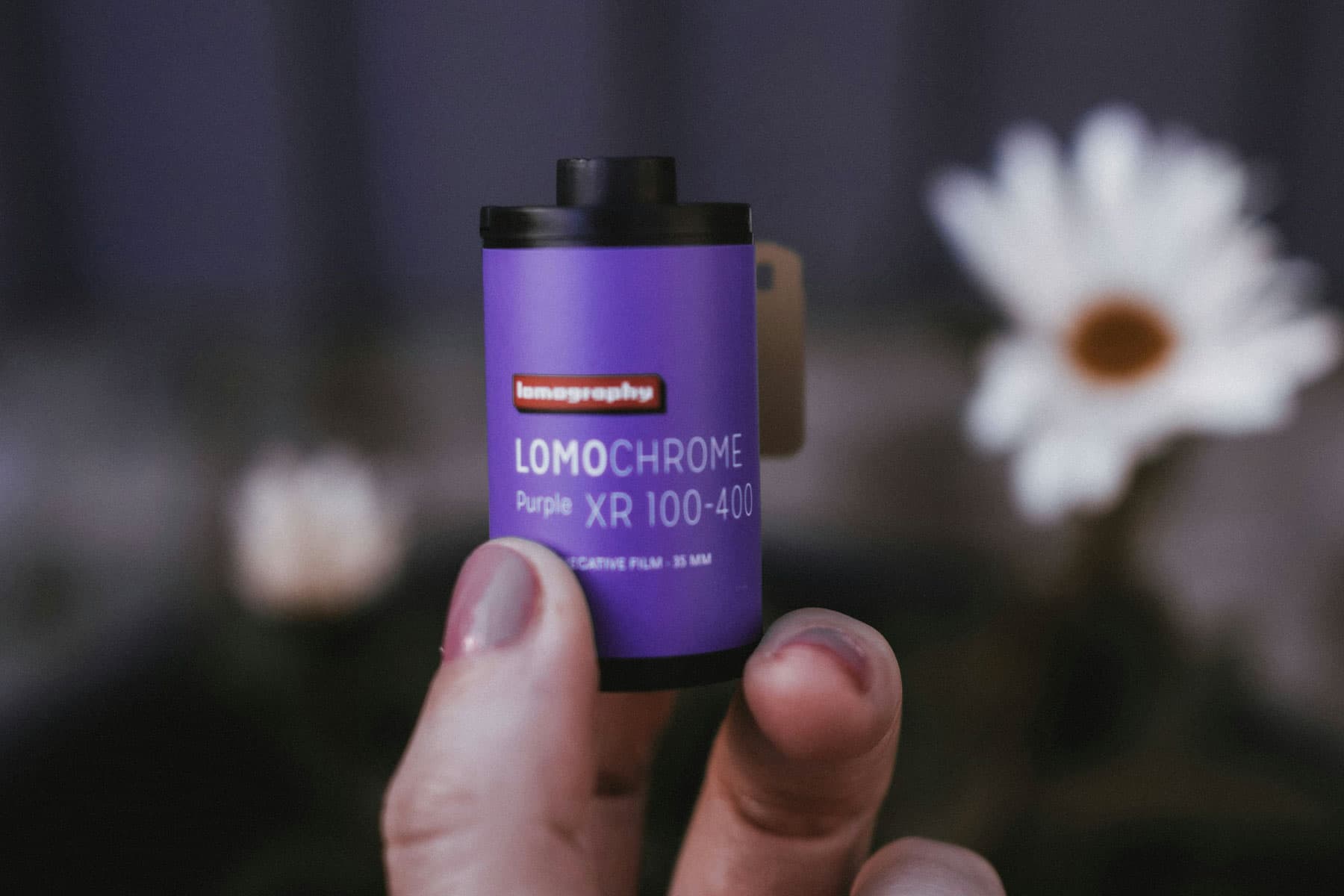
Lomochrome Purple delivers false-color shifts (green→purple, blue→green, yellow→pink), wide exposure latitude (ISO 100-400), and Aerochrome-inspired surreal aesthetic in a C-41 processable film. Best for creative photography, landscapes with greenery, and photographers who embrace experimental unpredictability.
Film photographers debate Lomochrome Purple endlessly: some praise its distinctive color shifts and Aerochrome-inspired surreal aesthetic that transforms ordinary scenes. Others question whether the variable ISO complexity, scanning challenges, and premium price justify choosing it over standard film. The debate centers on whether Lomochrome Purple's creative effects are worth the experimental nature.
Lomochrome Purple Background
Lomography introduced Lomochrome Purple in 2013 as a false-color specialty film inspired by the legendary Kodak Aerochrome infrared film. The film was reformulated in 2019 with the "Pétillant" edition that improved color shifts and consistency. Made exclusively by Lomography and available in 35mm, 120, and 110 formats.
Despite the "chrome" name, it's actually a color negative film processed in standard C-41 chemistry, which makes it accessible at any lab. Key features include variable ISO 100-400 (no DX code, so you set it manually), distinctive color shifts (green→purple, blue→green, yellow→pink), wide exposure latitude marketed as "XR" (Extended Range), visible grain, and a requirement for bright light to really shine. Within the film community, Lomochrome Purple has earned cult status for transforming ordinary scenes into surreal, dreamlike imagery.
Lomochrome Purple Image Characteristics
Color & Tone
Lomochrome Purple's color palette is false-color and genuinely surreal in the best way. Green becomes purple (the signature effect everyone shoots this film for), blue becomes green/teal, yellow becomes pink, red stays mostly red, and pink becomes yellow. Purples actually become green, which is wild. Skin tones stay relatively natural with a pink/rosy cast that's usually flattering. The film shows low-medium contrast straight from the scanner, requiring work in post. Think surreal, otherworldly, dreamlike, this is experimental film at its finest. Color intensity varies significantly by ISO: ISO 100 produces paler pink-purples, ISO 200 produces balanced purple tones, and ISO 400 produces deeper indigo-purples. The overall mood is trippy, magical, and fairytale-like.
Contrast & Dynamic Range
Lomochrome Purple delivers wide exposure latitude that Lomography markets as "Extended Range" (XR), which is accurate. The film handles variable ISO 100-400 with normal development, giving you flexibility. Shadow detail drops off quickly though, creating a punchy, contrasty look that can be dramatic. Highlights hold well in bright sun without blowing out. Contrast is flat straight from the scanner, requiring manual RGB adjustment to bring images to life. The film genuinely needs bright light for best results, this isn't optional. In overcast or low light, colors become muddy and disappointing. The shoulder and toe behavior is forgiving in bright conditions where the film thrives.
Grain & Sharpness
Lomochrome Purple shows visible grain comparable to standard ISO 400 film. In 35mm, grain is noticeable with gritty character. In 120, grain is minimal. Sharpness is good with defined edges. The grain has character: sharp-edged, well-defined, adds to surreal aesthetic. Resolution is decent with fine detail. Grain structure can fall apart in underexposed situations.
Color Shift Characteristics
The signature effect is what makes this film special: green foliage becomes vibrant purple in bright sun, which is absolutely magical when it works. Intensity depends on lighting angle, texture, and leaf structure, so results vary. Waxy leaves produce more intense purple than matte ones. Blues in the sky become teal/cyan, more pronounced with the sun behind the photographer. Yellows become pink/magenta in varying degrees. Reds stay reddish with slight desaturation. Whites stay white, thankfully. Browns can shift toward purple, which is interesting. Urban gray settings lose the magic entirely, this film needs color. Flowers can look monochromatic and disappointing. The effect is most dramatic in bright sunlight with lots of greenery.
How to Shoot Lomochrome Purple: Landscape Photography, Nature Photography, and More
Lomochrome Purple thrives in bright sunlight with colorful subjects, especially greenery.
Box Speed, Pushing & Pulling
Lomochrome Purple is rated at variable ISO 100-400. Lomography recommends ISO 200 as sweet spot. Shoot at ISO 100 for paler pinker purples. Shoot at ISO 200 for balanced purple tones. Shoot at ISO 400 for deeper indigo purples. The film has no DX code, requiring manual ISO setting. In cameras defaulting to ISO 100, results will be overexposed with paler tones. In cameras defaulting to ISO 25 (Konica), results will be severely overexposed. Develop normally in C-41 regardless of ISO chosen.
Ideal Lighting & Metering
Lomochrome Purple loves bright sunlight. The film needs lots of light for best results. Meter for midtones or err toward overexposure at ISO 100. In bright sun with greenery, the film produces most dramatic purple shifts. On overcast days, colors become muddy and disappointing. In shade, purple effect diminishes. Indoors is not recommended unless using flash. Backlit situations increase grain. For maximum purple effect, shoot in full sun with green subjects. Polarizing filter deepens sky teal. The film "loves light" according to community consensus.
Best Cameras for Lomochrome Purple: Holga, Diana F+, and More
Lomochrome Purple works in any camera but shines in experimental setups. Toy cameras (Holga, Diana F+, Vivitar Ultra Wide & Slim) work great with fixed settings in bright sun. Point-and-shoots work well despite no DX code. Manual cameras allow ISO control for creative effects. Medium format (Pentax 645, Mamiya 7) minimizes grain. Half-frame cameras work but show more grain. The film's forgiving nature suits imprecise cameras. Note: no DX code means some electronic cameras may not work.
Scanning & Post-Processing (Digitizing Your Results)
Lab Scans vs Home Scanning
Labs handle Lomochrome Purple but automated color correction can wash out effects. Request no color correction or manual scanning. The film has green base (not orange), confusing scanners. Initial scans are flat. When scanning at home, disable auto color correction. Scan as if shooting Ektar for best starting point. Manual RGB channel adjustment brings images to life. Expect to spend time in post-processing. Some rolls show thin lines across frames, easily removed in Lightroom.
Digital Flexibility & Grading
Lomochrome Purple's flat scan gives room to adjust. You can shift hues toward yellow or blue for different effects. Color correction can make some elements look natural while keeping purple surreal. The film takes dramatic color grading well. You can create near-blue scale or emphasize pink tones. Contrast adjustment is mandatory for punchy results. Most shooters add significant contrast and saturation in post.
When Lomochrome Purple Shines: Creative Photography and Experimental Photography
Best for: Landscape photography (greenery becomes purple), nature photography (forests, parks, foliage), creative photography (surreal aesthetic), experimental photography (unpredictable results), travel photography (unique perspective), outdoor photography (bright sun required), artistic photography (otherworldly feel), toy camera photography (forgiving nature), portrait photography (with greenery background).
Struggles with: Low-light situations (muddy colors), overcast days (flat results), indoor photography (needs flash), urban gray settings (loses magic), flower photography (monochromatic look), situations requiring color accuracy, budget shooting (expensive), predictable results (inherently experimental), night photography (not recommended), subjects without greenery.
If you need X, shoot Y instead:
- "Need color accuracy" → Kodak Portra 400 or Ektar 100
- "Need low-light capability" → Kodak Portra 800 or CineStill 800T
- "Need predictable results" → Any standard color negative film
- "Need to save money" → Kodak Gold 200 or Fujicolor C200
Lomochrome Purple vs Kodak Aerochrome, Lomochrome Turquoise, and Standard Film
If you're considering Lomochrome Purple, you're probably curious about Aerochrome and other creative films. Kodak Aerochrome (discontinued) was true infrared with more dramatic shifts but costs $300-400 per roll. Lomochrome Turquoise offers different color shifts (orange→turquoise) but makes skin blue. Standard films offer predictability. Lomochrome Purple sits in the creative niche: accessible false-color effects without infrared complexity.
Choose Lomochrome Purple if you want surreal color shifts, Aerochrome-inspired aesthetic, and C-41 processing convenience. Choose Aerochrome if you have budget for true infrared. Choose Turquoise for different palette. Choose standard film for predictable results.
* Prices as of December 2025 – always fluctuating. Check current suppliers.
| Film | Why choose it | Where it loses vs Lomochrome Purple | Typical price* |
|---|---|---|---|
| Kodak Aerochrome | True infrared, more dramatic shifts, legendary status | Discontinued, $300-400/roll, requires special handling | $300-400/roll |
| Lomochrome Turquoise | Different color shifts (orange→turquoise), same C-41 processing | Makes skin blue, less popular aesthetic | $12-14/roll |
| Kodak Portra 400 | Predictable, accurate colors, versatile | No creative color shifts, standard look | $13-15/roll |
Digital Alternative (When You Can't Shoot Film)
Lomochrome Purple's false-color shifts are nearly impossible to replicate digitally. The complex color transformations based on subject texture, lighting angle, and exposure create unique results that filters cannot match. While our Daydream preset offers balanced cinematic looks, it doesn't attempt to replicate specialty films like Lomochrome Purple. For this aesthetic, shooting the actual film is the only authentic option.
Is Lomochrome Purple Worth It in 2025?
Lomochrome Purple is available in 35mm, 120, and 110. As of December 2025, expect to pay $12-14 for 35mm, $13-15 for 120. It's expensive, double standard film cost. Widely available from Lomography website, B&H, Freestyle, and Analogue Wonderland.
At $13 per roll, Lomochrome Purple is expensive and experimental. Worth it for creative photographers who want surreal color shifts and embrace unpredictability. Not worth it for practical shooting requiring color accuracy. Bottom line: if you shoot landscapes with greenery, want Aerochrome-inspired effects, and enjoy experimental photography, Lomochrome Purple justifies its premium price as creative tool.
Frequently Asked Questions
Is Lomochrome Purple worth it in 2025?
In 2025, Lomochrome Purple costs around $13 per roll, making it expensive. Worth it for creative photographers who want surreal color shifts and Aerochrome-inspired effects. If you shoot landscapes with greenery in bright sun and embrace experimental results, the unique aesthetic justifies the cost. For practical photography requiring color accuracy, standard films offer better value. In short, if creativity and experimentation matter more than predictability, Lomochrome Purple is worth every penny.
Lomochrome Purple vs Aerochrome – what's the difference?
Comparing Lomochrome Purple to Kodak Aerochrome: Aerochrome is true infrared film with more dramatic color shifts but costs $300-400 per roll and is discontinued. Lomochrome Purple is false-color film processed in standard C-41, much more affordable and accessible. Purple produces similar aesthetic without infrared complexity. Choose Lomochrome Purple for accessible Aerochrome-inspired effects. Choose Aerochrome if you have budget for authentic infrared.
What ISO should I shoot Lomochrome Purple at?
Lomochrome Purple is variable ISO 100-400. Shoot at ISO 200 for best balanced results (recommended sweet spot). Shoot at ISO 100 for paler pink-purples and lighter teal skies. Shoot at ISO 400 for deeper indigo purples and darker blues. The film has no DX code, requiring manual ISO setting. Develop normally in C-41 regardless of ISO chosen. Most photographers prefer ISO 200 for optimal color shifts.
Does Lomochrome Purple work in low light?
No, Lomochrome Purple struggles in low light. The film needs bright sunlight for best results. In overcast or low-light conditions, colors become muddy, muted, and disappointing. Indoor shooting requires flash. The film "loves light" and produces most dramatic purple shifts in full sun. For low-light photography, choose Kodak Portra 800 or CineStill 800T instead. Lomochrome Purple is daylight-only film.
How do you scan Lomochrome Purple?
Lomochrome Purple scans require manual adjustment. Disable automated color correction which washes out effects. The film has green base (not orange), confusing scanners. Initial scans are flat. Manually adjust RGB channels for contrast and color. Scan as if shooting Ektar or ColorPlus for best starting point. Expect post-processing work. Some labs understand specialty films better than others. Request manual scanning or no color correction for best results.
What subjects work best with Lomochrome Purple?
Lomochrome Purple works best with greenery in bright sunlight. Shoot landscapes, forests, parks, and foliage for most dramatic purple shifts. The film transforms green subjects into vibrant purple. Also works well for portraits with leafy backgrounds, outdoor scenes with trees, and nature photography. Avoid urban gray settings, flowers, and subjects without green elements. The film needs colorful subjects and bright light for best results.
Can you use Lomochrome Purple for portraits?
Yes, Lomochrome Purple works for portraits but with caveats. Skin tones stay relatively natural with pink/rosy cast. Best results with greenery in background for purple effect. Not ideal for traditional portrait work requiring accurate skin tones. Works well for creative/artistic portraits embracing surreal aesthetic. The film adds unique character to portrait sessions. For natural skin tones, choose Kodak Portra 400 instead.
Why is Lomochrome Purple so expensive?
Lomochrome Purple is expensive ($13 per roll) due to specialty emulsion, complex manufacturing, and lower production volume. The false-color effect requires unique chemistry. Made exclusively by Lomography with mystery manufacturer. At double the cost of standard color negative film, it's premium creative tool. The price reflects experimental nature and niche market. For budget shooting, standard films offer better value.
Related reading
Related Topics
Join the iOS Beta
Join the beta to be the first to experience authentic film photography with Daydream Film.