
Film Reviews
Ilford Delta 400 Review: T-Grain Black-and-White Film

Shane Labelle
· 9 min read
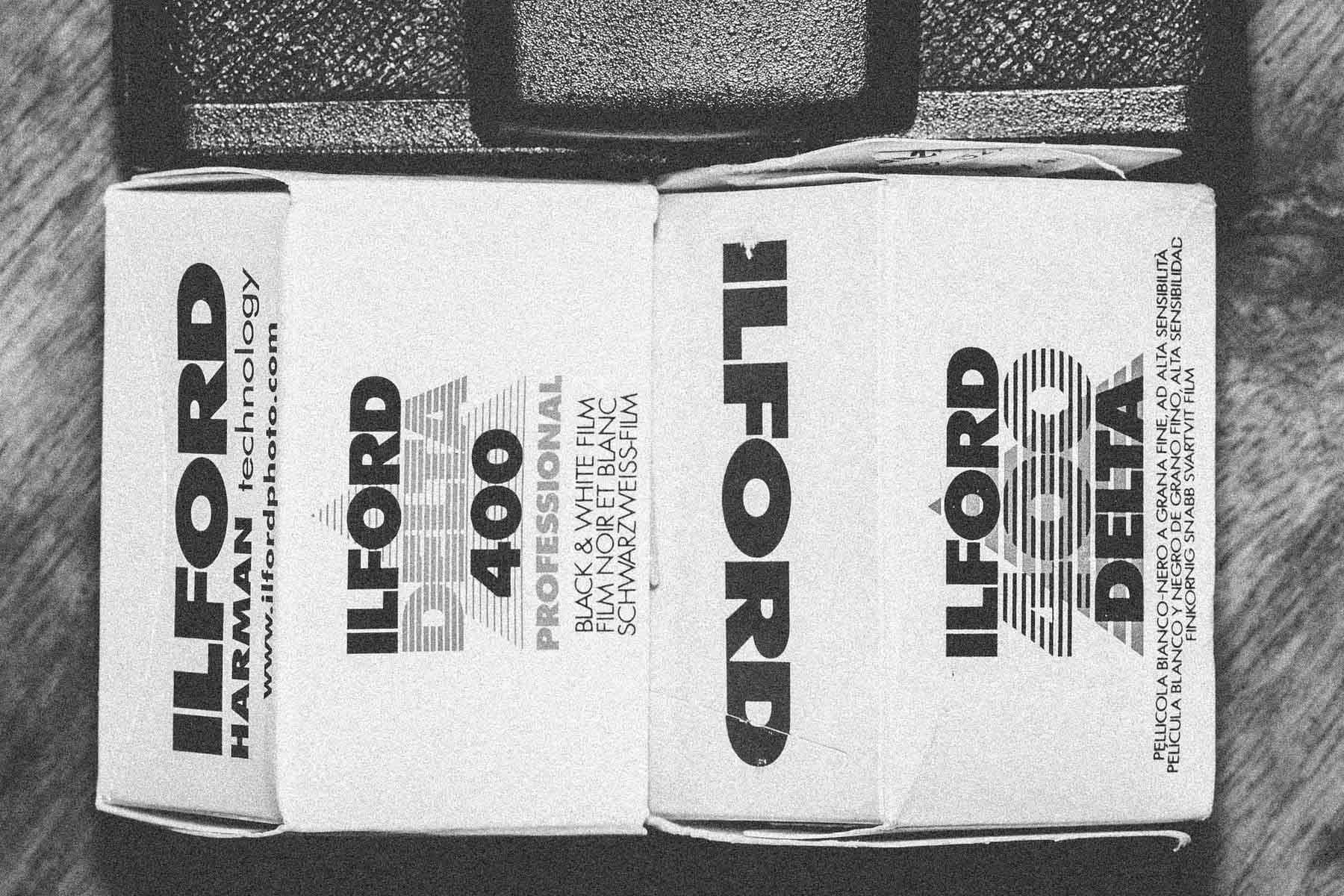
Verdict
Ilford Delta 400 delivers fine grain, exceptional sharpness, inky blacks, and wide exposure latitude (ISO 200-3200) using Core-Shell tabular grain technology. Best for portraits, weddings, and situations requiring clean modern aesthetic over gritty classic look.
Film photographers debate Ilford Delta 400 endlessly: some praise its fine grain, exceptional sharpness, and inky blacks that rival modern digital. Others question whether the modern clinical look sacrifices the gritty character that makes film special compared to classic cubic grain stocks like HP5+ and Tri-X. The debate centers on whether tabular grain technology's technical superiority translates to aesthetic superiority.
Ilford Delta 400 Background
Ilford introduced Delta 400 in 1990 as their answer to Kodak's T-Max line, bringing tabular grain technology to Ilford's lineup. It was the first of the Delta family, with Delta 100 following in 1992 and Delta 3200 in 1998. The film has been reformulated once since its introduction but maintains the same core characteristics.
Delta 400 uses Core-Shell crystal growth technology, Ilford's proprietary tabular grain emulsion (not technically "T-Grain" which is Kodak's trademark, though they work similarly). Available in 35mm, 120, and sheet film formats.
Key features include ISO 400 speed, fine grain that rivals slower films, exceptional sharpness, medium contrast, wide exposure latitude (ISO 200-3200), and inky blacks that make highlights pop. Within the film community, Delta 400 has earned a reputation as the modern professional alternative to classic HP5+ and Tri-X.
Ilford Delta 400 Image Characteristics
Tone & Contrast
Ilford Delta 400's tonal palette is smooth and decidedly modern in character. Blacks are inky and rich, greys are silky smooth, and highlights are clean without harshness. The film shows medium contrast that's less aggressive than Tri-X but more controlled than HP5+. Think clean, professional, timeless, this is what modern black and white looks like. Contrast can be easily manipulated in post without harsh grain appearance, giving you flexibility. Tonal range is exceptional with smooth gradations throughout. In bright light with proper exposure, contrast is excellent and punchy. The overall mood is sophisticated and polished.
Dynamic Range
Ilford Delta 400 delivers approximately 10 stops of dynamic range, which is solid for black and white. The toe has a sharper bend than the shoulder, meaning less latitude in shadows but more in highlights. In practice, the film retains detail in highlights beautifully but loses shadow information fairly quickly if underexposed. Best results come from precise exposure that errs toward overexposure rather than under. Shadow grain becomes more prominent when underexposed, which can be problematic. The film preserves highlight detail exceptionally well, rarely blowing out. For strong contrast, use a high-contrast lens and yellow filter optically rather than relying on the film alone.
Grain & Sharpness
Ilford Delta 400 shows fine grain for an ISO 400 film, which is one of its main selling points. The tabular grain structure creates a smoother look than cubic grain films like HP5+ or Tri-X. In 120 format, grain is rarely noticeable at all. In 35mm, grain is present but not overwhelming, maintaining that professional look. Sharpness is exceptional with beautifully defined edges throughout. The grain has distinctive character, uniform, fine, and smooth rather than gritty. Resolution is excellent with fine detail that holds up to scrutiny. There's less noise in highlights compared to HP5+, which is nice. Details in mid-tones are crisp and legible. In shadows, Delta 400 performs significantly better than cubic grain films. Grain appears larger with contrast increases but doesn't lose detail, which is impressive.
How to Shoot Ilford Delta 400: Portrait Photography, Wedding Photography, and More
Ilford Delta 400 thrives in controlled lighting with precise exposure.
Box Speed, Pushing & Pulling
Ilford Delta 400 is rated at ISO 400. Shoot at box speed for best results. The film has wide exposure latitude, rated ISO 200-3200 by manufacturer. Can be pushed to ISO 800 or ISO 1600 for contrasty look. Many photographers love pushed Delta 400 aesthetic. Can be pulled to ISO 200 for smoother results. As tabular grain film, expect less latitude than conventional grain films. Correct exposure is more important than with HP5+ or Tri-X. Best to err toward overexposure to preserve shadow detail.
Ideal Lighting & Metering
Ilford Delta 400 works in variable lighting but rewards precise metering. In bright sunlight, the film produces excellent contrast and detail. In mixed lighting, the film maintains clean look. For portraits, the film handles window light beautifully. Meter for midtones or err toward overexposure. The film's sharp toe means underexposure quickly loses shadow detail. Highlights are more forgiving. Use spot metering for critical work. The ISO 400 speed gives flexibility for indoor and outdoor shooting. Yellow filter enhances contrast optically.
Best Cameras for Ilford Delta 400: Hasselblad, Leica M, and More
Ilford Delta 400 works in any camera but shines with quality optics. Medium format cameras (Hasselblad 500CM, Mamiya RZ67, Pentax 67, Rolleiflex 2.8F) showcase fine grain beautifully. 35mm cameras (Leica M-series, Nikon F3, Canon AE-1) work great for versatile shooting. The film's sharpness benefits from quality lenses. Point-and-shoots work but may not showcase full potential. Large format produces stunning detail.
Scanning & Post-Processing (Digitizing Your Results)
Lab Scans vs Home Scanning
Labs handle Ilford Delta 400 well with standard processing. The film scans easily with straightforward inversion. When scanning at home, the film responds well to digital manipulation. Inverting in Photoshop is simple. Initial scans may appear flat, requiring contrast adjustment. The film doesn't create harsh grain when contrast is increased. Pay attention to deep shadows which can become unnaturally black. High-quality scans reveal exceptional detail.
Digital Flexibility & Grading
Ilford Delta 400's smooth grain allows extensive post-processing. The film responds well to contrast manipulation without losing detail. Grain appears larger with contrast increases but maintains character. Can achieve HP5+-like grain with medium contrast gain. The neutral starting point allows creative interpretation. Most shooters add moderate to high contrast in post. The film takes dramatic toning well. Cropping is possible due to fine grain. For best results, use high-contrast lens and yellow filter during shooting.
When Ilford Delta 400 Shines: Portrait Photography and Wedding Photography
Best for: Portrait photography (fine grain, flattering tones), wedding photography (professional quality), commercial photography (clean aesthetic), studio photography (controlled lighting), fashion photography (sharp detail), architectural photography (fine detail), landscape photography (with yellow filter), candid photography (versatile speed), documentary photography (timeless look).
Struggles with: Street photography requiring gritty character (too clean), situations where classic grain aesthetic preferred (modern look), extreme pushing/pulling (less latitude than cubic grain), underexposure situations (loses shadow detail), photographers wanting Tri-X character (different aesthetic), budget shooting (20% more expensive than HP5+).
If you need X, shoot Y instead:
- "Need gritty classic look" → Ilford HP5+ or Kodak Tri-X 400
- "Need extreme pushing capability" → Ilford HP5+ or Kodak Tri-X 400
- "Need budget option" → Ilford HP5+ or Kentmere 400
- "Need maximum grain" → Ilford Delta 3200 or Kodak Tri-X
Ilford Delta 400 vs Ilford HP5+, Kodak Tri-X 400, and Kodak T-Max 400
If you're considering Ilford Delta 400, you're probably curious about other ISO 400 B&W films. Ilford HP5+ offers classic cubic grain and costs 20% less but shows more grain. Kodak Tri-X 400 provides gritty cinematic look. Kodak T-Max 400 uses similar tabular grain but Delta 400 has better highlights. Ilford Delta 400 sits in the modern professional niche: technical excellence with fine grain.
Choose Ilford Delta 400 if you want fine grain and modern aesthetic. Choose HP5+ for classic look and budget. Choose Tri-X for gritty character. Choose T-Max 400 for similar performance.
* Prices as of December 2025 – always fluctuating. Check current suppliers.
| Film | Why choose it | Where it loses vs Ilford Delta 400 | Typical price* |
|---|---|---|---|
| Ilford HP5+ | Classic cubic grain, 20% cheaper, more forgiving development | More grain, less sharp, grittier look | $7-9/roll |
| Kodak Tri-X 400 | Gritty cinematic look, more exposure latitude, iconic character | More grain, less sharp, different aesthetic | $8-10/roll |
| Kodak T-Max 400 | Similar tabular grain, fine grain, high sharpness | Highlights less forgiving, different developer needs | $9-11/roll |
Digital Alternative (When You Can't Shoot Film)
Ilford Delta 400's fine grain can be approximated digitally with careful black-and-white conversion. Our Noir preset offers rich contrast, deep shadows, and dramatic tonal separation inspired by classic B&W cinema film stocks. While it doesn't replicate Delta 400's specific tabular grain structure, it captures the sophisticated monochrome aesthetic. For photographers wanting Delta 400's clean look digitally, high-quality B&W conversion can get close.
Is Ilford Delta 400 Worth It in 2025?
Ilford Delta 400 is available in 35mm, 120, and sheet film. As of December 2025, expect to pay $9-11 for 35mm, $10-12 for 120. It's more expensive than HP5+ (about 20% premium) but comparable to T-Max 400. Widely available from B&H, Freestyle, Analogue Wonderland, and most photo retailers.
At $9-11 per roll, Ilford Delta 400 is premium-priced for ISO 400 B&W film. Worth it for photographers who want fine grain and modern professional aesthetic. Not worth it for street photographers preferring gritty classic look. Bottom line: if you shoot portraits, weddings, or commercial work requiring clean technical excellence, Ilford Delta 400 justifies its premium price as modern professional standard.
Frequently Asked Questions
Is Ilford Delta 400 worth it in 2025?
In 2025, Ilford Delta 400 costs around $9-11 per roll, about 20% more than HP5+. Worth it for photographers who want fine grain, exceptional sharpness, and modern professional aesthetic for portraits, weddings, and commercial work. If you prefer gritty classic look of HP5+ or Tri-X, the premium price may not justify the difference. For clean technical excellence, Ilford Delta 400 is absolutely worth it as modern professional standard.
Ilford Delta 400 vs HP5+ – what's the difference?
Comparing Ilford Delta 400 to HP5+: Delta 400 uses tabular grain (Core-Shell technology) for finer grain and exceptional sharpness. HP5+ uses cubic grain for grittier classic look. Delta 400 costs 20% more, requires more precise development, and has less exposure latitude. HP5+ is more forgiving, cheaper, and has classic character. Choose Delta 400 for modern professional work. Choose HP5+ for classic gritty aesthetic and budget.
What ISO should I shoot Ilford Delta 400 at?
Ilford Delta 400 is rated at ISO 400. Shoot at box speed for best balanced results. The film has wide exposure latitude rated ISO 200-3200. Can push to ISO 800 or ISO 1600 for contrasty look. Can pull to ISO 200 for smoother results. As tabular grain film, it has less latitude than cubic grain films. Best to err toward overexposure to preserve shadow detail. Correct exposure is more important than with HP5+.
Does Ilford Delta 400 work for street photography?
Ilford Delta 400 works for street photography but may not be ideal choice. The fine grain and clean modern look can appear too clinical for street aesthetic. Many street photographers prefer grittier character of HP5+ or Tri-X 400. Delta 400's exceptional sharpness and detail are excellent, but contrast isn't consistently dramatic enough for some. Best for street photographers who want clean timeless look over gritty character.
How do you develop Ilford Delta 400?
Ilford Delta 400 can be processed in wide range of developers. Best results with Ilford DD-X (designed for Delta films), Kodak HC-110 (rich tones, smooth grain), Kodak D-76 (moderate contrast), or Pyrocat-HD (clean grainless look). As tabular grain film, requires more precise development than cubic grain films. Longer fixing times than HP5+. Choice of developer more important. Processing needs to be more accurate. Correct exposure when shooting is critical.
What subjects work best with Ilford Delta 400?
Ilford Delta 400 works best for portraits with fine grain and flattering tones. Excellent for weddings requiring professional quality. Great for commercial photography, studio work, fashion photography, and architectural photography. The fine grain and exceptional sharpness suit controlled lighting situations. Also good for candids, documentary work, and landscape photography (with yellow filter). Less ideal for street photography requiring gritty character.
Can you push Ilford Delta 400?
Yes, Ilford Delta 400 can be pushed to ISO 800 or ISO 1600. Many photographers love pushed Delta 400 aesthetic with increased contrast. As tabular grain film, it has less exposure latitude than cubic grain films, making extreme pushing less forgiving. Pushed Delta 400 appears more contrasty but still gorgeous. Best for situations requiring extra speed. Not as conducive to extreme pushing as HP5+ or Tri-X.
Why is Ilford Delta 400 more expensive than HP5+?
Ilford Delta 400 costs about 20% more than HP5+ due to Core-Shell tabular grain technology requiring more complex manufacturing. The professional quality, fine grain, and exceptional sharpness justify premium price. Delta films use modern emulsion design versus HP5+'s conventional grain structure. The technical excellence and clean aesthetic command higher price. For photographers needing professional results, the premium is worthwhile.
Related Topics
Join the iOS Beta
Join the beta to be the first to experience authentic film photography with Daydream Film.