
Camera Reviews
Konica Big Mini Review: Sharp Konica Lens, Fragile Reputation
Daydream Editorial
· 8 min read
Verdict
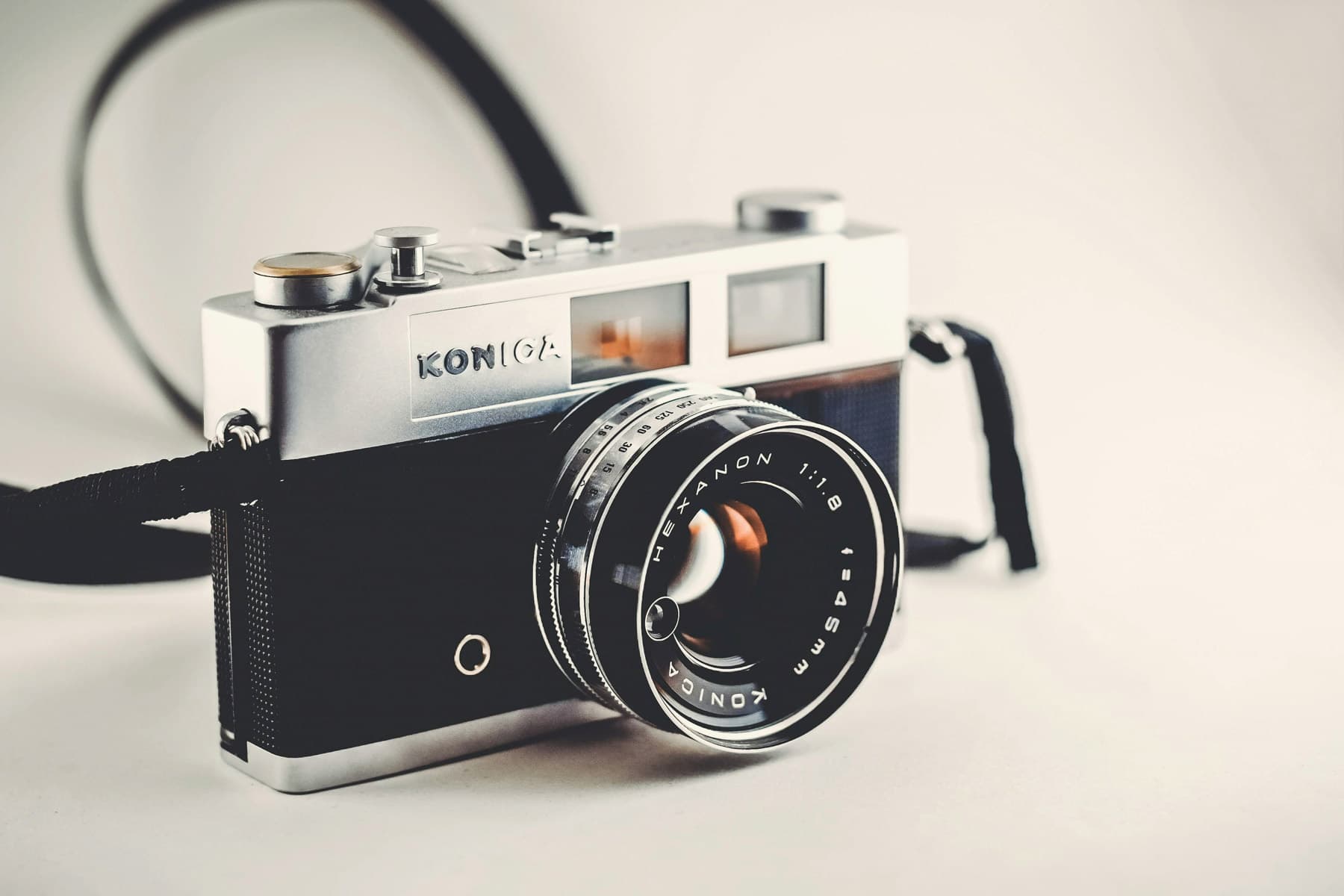
The Konica Big Mini BM-201 is a compact 35mm point-and-shoot with a sharp f/3.5 Konica lens, exposure compensation, and genuinely pocketable size. It delivers excellent image quality with good contrast and corner-to-corner sharpness. But every Big Mini carries a fatal flaw: fragile electronics that fail without warning, a shutter button that wears out with use, and a motor so loud it sounds like a power drill. This is a camera you'll love until it dies.
Film photographers are split on the Konica Big Mini: some praise its sharp Konica lens that rivals cameras costing twice as much, others avoid it entirely because of its notorious reliability problems. The debate centers on whether exceptional image quality justifies buying a camera that might die unexpectedly.
Background & Key Features
Konica released the Big Mini BM-201 in 1990 as a mid-range compact that punched way above its weight class, offering Konica's legendary lens quality in an affordable package. It was positioned between cheap point-and-shoots and premium compacts, delivering image quality that rivaled cameras costing twice as much. The camera spawned an entire lineup including the BM-302 (with a quieter motor, thankfully) and Big Mini F (faster f/2.8 lens for low light).
The plastic and metal body houses a Konica 35mm f/3.5 lens (4 elements in 4 groups) that's genuinely excellent. Notable features include infrared autofocus (0.35m to infinity—impressively close), center-weighted metering (EV 2-17), programmed shutter (3.6s-1/500s), DX film speed reading (ISO 25-3200), exposure compensation (+1.5 to -1.5 EV, which is unusual for a mid-range compact), and automatic flash. At 188g and 115×63×34mm, it genuinely fits in a jacket pocket without bulk.
The Big Mini gained cult status for its sharp lens and absurdly low prices—you could find these for $20-30 in the 2010s. Now they're $150-250 as people discovered the image quality, though reliability concerns keep prices from going higher.
Design & Handling
The Big Mini feels surprisingly solid at 188g, with a metal front plate and matte black plastic back that doesn't feel cheap. The camera is genuinely pocketable at 34mm deep, disappearing into jacket pockets without the bulk of premium compacts. The exposed lens (no cap available) feels odd at first—you'll worry about scratching it—but you adapt quickly. The power and shutter buttons sit next to each other in a comfortable spot that your thumb finds naturally.
The viewfinder is bright with clear albada framelines, parallax marks, and LED indicators that do their job. The LCD panel shows frame count and battery status without powering on, which is convenient. But here's where things get frustrating: the three tiny rubber buttons on the back are virtually unusable without a pencil or fingernail. Seriously flawed design that'll make you curse when you need to adjust settings.
Now for the elephant in the room: the motor is absurdly loud—power drill loud. The lens extends with a whirr like a battery-powered screwdriver, and the film advance is equally noisy. This is not a stealthy camera. Everyone within 10 feet will know you're taking photos. The shutter button requires a firm press with no definitive click, and on worn units (which is most of them by now) often needs multiple presses to fire. This notorious failing shutter button problem affects many Big Minis and isn't worth repairing—when the button goes, the camera is basically dead.
How the Konica Big Mini Shoots: Street Photography and Travel Photography Performance
Metering & exposure behavior
The center-weighted metering (EV 2-17) is consistently accurate, nailing exposure in most situations without fuss. The 3.6s-1/500s shutter range handles everything from handheld low-light to bright sun, which is impressive flexibility for a compact. The meter tends toward slight underexposure, which actually works beautifully with black and white film—you'll get rich, dense negatives. With color negative in high-contrast scenes, you may need to dial in +1.5 EV compensation to keep shadow detail. The exposure compensation feature (+1.5 to -1.5 EV) is genuinely unusual for a mid-range compact—most cameras in this price range don't give you that control. One annoyance: settings reset when you power off, so you'll need to remember to adjust compensation again if you're shooting backlit subjects all day.
Focusing experience
The infrared autofocus is reasonably fast and accurate, locking focus in 85-90% of shots. Half-pressing locks focus and exposure for recompose-and-shoot. The 0.35m minimum focus distance is exceptional for a compact. The camera automatically activates macro mode between 0.35m-0.6m, creating decent bokeh. For street photography, the AF is quick enough for candid work, though it struggles with low-contrast subjects.
Lens character & image quality
Here's why people tolerate all the frustrations: the Konica 35mm f/3.5 lens is genuinely the star of this camera. The center sharpness is exceptional, rivaling interchangeable lenses and cameras costing twice as much—this is professional-grade optical performance in a $150 compact. Wide open at f/3.5, the lens is sharp with good contrast and minimal aberrations. Stop down to f/5.6-f/8 and it delivers razor-sharp corner-to-corner images that'll make you forget about the loud motor for a moment.
Color rendition is excellent with smooth, pastel-like colors characteristic of classic Konica lenses. Where other point-and-shoots oversaturate everything to look "punchy," the Big Mini opts for a more balanced, natural finish. On Kodak Gold 200, colors are warm and natural without being garish. On Portra 400, skin tones are beautiful with smooth gradation. Black and white film reveals stunning tonal separation—shoot HP5 and you'll get rich contrast with excellent shadow detail.
The lens maintains sharpness across the frame, avoiding the soft corners that Olympus Mju cameras are known for. Flare resistance is good, though not exceptional. Chromatic aberration is minimal. The lens shows marginal softness in close-up mode, but this is barely noticeable in practice.
Bokeh at f/3.5 is smooth and pleasant in close-up mode, with nicely rounded highlights. The f/3.5 maximum aperture does limit low-light handheld capability without flash—you'll need ISO 800+ film or a steady hand. Thankfully, the built-in flash is actually excellent—powerful, fast-recycling (3 seconds), and smart enough to adjust brightness automatically without blowing out subjects.
Film pairings that sing
- Kodak Gold 200 for warm tones and affordable everyday shooting
- Portra 400 for versatile shooting with beautiful skin tones
- Ilford HP5 Plus for black and white with rich contrast
- Fujifilm C200 for vibrant colors and travel photography
Best Uses: Street Photography, Travel Photography, and More
Best at: Street photography (compact, sharp lens, close focus), travel photography (pocketable, reliable metering), urban photography (35mm focal length), close-up photography (0.35m minimum focus)
Struggles with: Low-light without flash (f/3.5 lens), stealth shooting (absurdly loud motor), long-term reliability (electronics fail), button operation (shutter button wears out)
If this is you → pick this body:
- "I want excellent quality on a budget and accept the risk" → Konica Big Mini
- "I want similar quality with better reliability" → Olympus Mju II
- "I want faster glass" → Konica Big Mini F
Konica Big Mini vs Olympus Mju II, Minolta TC-1, and Canon Sure Shot
The Olympus Mju II offers a faster f/2.8 lens, weatherproofing, and genuinely better reliability for $250-350 versus the Big Mini's $150-250. Image quality is nearly identical—both deliver excellent sharpness. The Mju II is the safer bet if you can afford the extra $100.
The Minolta TC-1 shares the square lens barrel design and offers titanium build with superior controls for $600-800. It's a more refined camera in every way, but you're paying triple for that refinement. The Canon Sure Shot provides similar quality with better reliability at comparable prices—it's a solid alternative if you want peace of mind.
Choose the Big Mini for excellent Konica quality at the lowest price, accepting the risk that it might die unexpectedly. Choose the Mju II for a faster lens and better reliability without spending much more. Choose the TC-1 if you want premium build and don't mind paying triple. Choose Canon Sure Shot for reliable operation without gambling. The Big Mini's lens quality genuinely matches cameras costing twice as much, but that fragility is a real concern you can't ignore.
* Prices as of December 2025. Big Mini prices reflect cult status tempered by reliability concerns.
| Camera | Why choose it | Where it loses vs Konica Big Mini | Typical used price* |
|---|---|---|---|
| Olympus Mju II | Faster f/2.8 lens, weatherproof, more reliable | Slightly less sharp, 35mm focal length | $250-350 |
| Konica Big Mini F | Faster f/2.8 lens, same Konica quality | Double the price, same reliability issues | $300-450 |
| Minolta TC-1 | Premium titanium, circular apertures, superior controls | Triple the price, equally loud motor | $600-800 |
Is the Konica Big Mini Worth It in 2025?
As of December 2025, the Big Mini sells for $150-250, up from $20-30 a decade ago. This reflects its cult status and excellent lens, but reliability concerns keep prices lower than the Mju II. The Big Mini delivers exceptional image quality rivaling cameras costing twice as much. What you're paying for: legendary Konica optics, exposure compensation, compact size. What you're risking: sudden electronic failure, worn shutter buttons, absurdly loud operation.
Worth it for photographers who want excellent image quality on a budget and accept the risk. The lens delivers results comparable to the Ricoh GR1. Not worth it if you need long-term reliability or stealth operation. Alternatives: Mju II for better reliability; Canon Sure Shot for similar quality with better durability; Big Mini F for faster f/2.8 glass (pay double). The Big Mini is a gamble—exceptional when it works, heartbreaking when it dies.
The Bottom Line
Buy it if
- You want excellent Konica image quality on a budget, have backup cameras, and can accept the risk of sudden failure. $150-250.
Skip it if
- You need long-term reliability, want stealth operation, or plan to use this as your only camera. Get an Olympus Mju II for better reliability.
Consider it if
You're a collector who appreciates cult cameras, shoot casually, and want to experience legendary Konica optics without the Hexar AF price tag.
Frequently Asked Questions
Is the Konica Big Mini worth it in 2025?
In 2025, the Konica Big Mini sells for $150-250. It's worth it for photographers who want excellent Konica image quality on a budget and can accept reliability risks. The lens delivers results comparable to cameras costing twice as much. If reliability is a concern, the Olympus Mju II offers similar quality with better durability for $250-350. In short, if you have backup cameras and want to experience legendary Konica optics, the Big Mini will delight you; otherwise, the Mju II is a safer choice.
Konica Big Mini vs Olympus Mju II – which is better?
Comparing the Big Mini to the Olympus Mju II: The Big Mini offers legendary Konica optics with smooth, balanced colors and exposure compensation for $150-250. The Mju II has a faster f/2.8 lens, weatherproofing, and better reliability for $250-350. Image quality is nearly identical—both deliver sharp, contrasty results. Choose the Big Mini if you want Konica rendering on a budget and accept reliability risks. Choose the Mju II for better long-term reliability and a faster lens. The Mju II is the safer investment.
What are common problems with the Konica Big Mini?
The most common issues are: shutter button failure (wears out with use, becomes hard to press or unresponsive), electronic failure (ribbon cables connecting control panel fail without warning), and absurdly loud motor (sounds like a power drill, not stealthy). Before buying, verify the shutter button works smoothly and be willing to accept that the camera may die unexpectedly. Factor in that repairs aren't economical—when it dies, you buy another.
Which film should I start with?
For the Konica Big Mini, I recommend starting with Kodak Gold 200—this combination delivers warm, natural colors that complement the Konica lens's smooth rendering, and it's affordable for everyday shooting. The Big Mini's accurate metering handles Gold 200 beautifully in most lighting conditions.
Can the Konica Big Mini handle street photography?
Yes, the Big Mini's compact size, sharp lens, and 0.35m close focus make it excellent for street photography. The 35mm focal length is ideal for urban work. However, the absurdly loud motor makes stealth shooting impossible—everyone will hear you take the photo. The shutter button also requires a firm press, which can slow you down. For street work where noise matters, consider the quieter Olympus Mju II instead.
How loud is the Konica Big Mini motor?
The motor is absurdly loud—comparable to a battery-powered screwdriver or power drill. The lens extends with a loud whirr, and the film advance is equally noisy. This is not a stealth camera. Multiple reviewers describe it as "jackhammer noisy" and "biodegradable Sun Chip bag noisy." The BM-302 model is significantly quieter if motor noise is a concern.
Is the Konica Big Mini F worth the extra cost?
The Konica Big Mini F features a faster f/2.8 lens (vs f/3.5 on standard models) and comes in a brushed silver finish. It's rumored to be slightly sharper than the standard lens. At $300-450 (double the standard Big Mini price), it's worth it if you need the extra stop of light for low-light shooting and want the absolute best Konica compact. However, it shares the same reliability issues as standard Big Minis.
What's the difference between BM-201 and BM-202?
The BM-201 comes with a data back for stamping dates/times on film. The BM-202 is identical but without the data back, resulting in a cleaner rear panel design. If you don't need date stamping (most photographers don't), the BM-202 offers a less cluttered back. Functionally, they're the same camera.
Related reading
Related Topics
Join the iOS Beta
Join the beta to be the first to experience authentic film photography with Daydream Film.